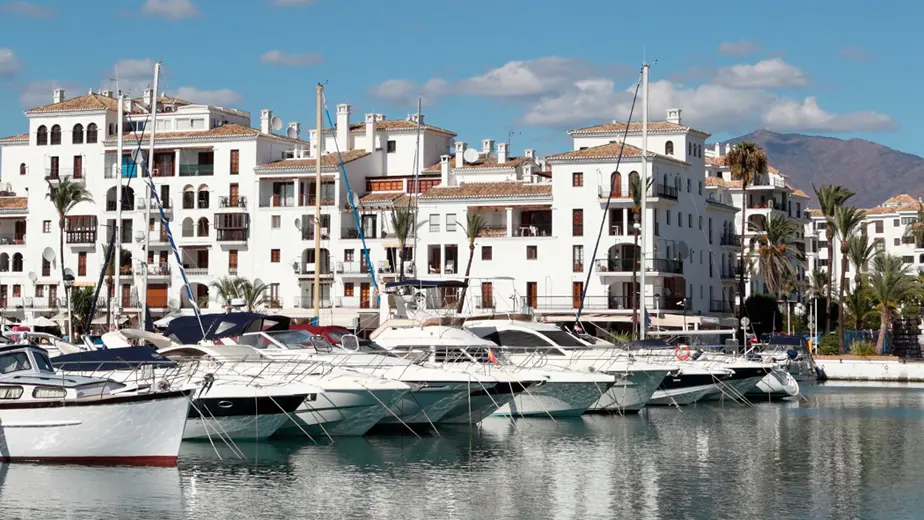
The Manilva tourist housing license suspension is a new municipal measure that pauses the issuance of viviendas de uso turístico (tourist housing licences) in designated high-pressure areas for the next three years. The aim is to protect local housing availability and rebalance tourism activity across the municipality, which directly affects owners, investors and developers considering short-term rental strategies.
Why Is Manilva Taking This Step?
According to the Urban Planning Councillor, the growth of short‑term tourist rentals has contributed to tension in the local housing market. With 2,809 registered tourist properties and nearly 15,000 tourist beds, large urbanisations,, particularly in coastal zones like El Hacho, Puerto de la Duquesa, Los Hidalgos, and Princesa Cristina, are predominantly occupied by visitors rather than long‑term residents, making it harder for locals to find affordable homes.
The suspension applies specifically to these “zonas tensionadas” (stressed areas), defined as areas with high tourist housing concentration and limited residential availability. During this period, no new licenses for tourist rentals will be granted in these zones.
Where the Suspension Applies, and Where It Doesn’t
- Affected areas: Coastal and urbanisation zones identified as stressed housing hotspots.
- Exempt areas: Manilva Pueblo, the historic town centre, is still permitted to issue tourist housing licenses.
- Potential future expansion: Authorities are evaluating similar restrictions in San Luis de Sabinillas if demand continues to grow.
The apparent rationale behind the exception for Manilva Pueblo is to maintain some flexibility for regulated tourism while reining in oversaturation in fringe urbanisation areas.
Policy Goals: Protecting Housing and Promoting Hotels
The official municipal reasoning centres on safeguarding constitutional access to housing for residents. The ordinance includes provisions to:
- Develop an urban planning tool to better define where tourist housing is appropriate.
- Increase long‑term residential availability by shifting properties away from short‑term tourism.
- Encourage the development of quality hotel accommodation to serve visitors while preserving resident‑oriented neighbourhoods.
The Councillor highlighted the need for more hotel infrastructure, both to meet service standards and to reduce reliance on housing stock for tourism.
What This Means for Property Owners and Investors
For property owners, investors, and developers, the ordinance introduces a period of regulatory uncertainty and re‑evaluation. Key implications include:
- No new tourist housing licences will be issued in stressed areas for three years. This affects properties in popular coastal communities where short‑term rentals have proliferated.
- Existing registered tourist accommodations remain in operation for now, but future zoning and licensing tools could change how they are regulated.
- Stakeholders interested in converting or developing properties for tourism should consult with legal counsel to assess alternatives such as long‑term rental use or hotel development partnerships.
This locally targeted suspension reflects broader regional trends. Across Andalusia, municipalities like Málaga city have introduced a three‑year delay on any new tourist homes to address similar housing pressures, illustrating an ongoing policy shift toward sustainable tourism and resident housing protection. Full article here
Legal Considerations
If you own or are considering purchasing a property in Manilva or the surrounding Costa del Sol municipalities:
- Verify zoning status before planning any tourist use; local classification of “tensioned” areas may impact permit eligibility.
- Review existing licences and compliance documentation, especially if you plan to rent on platforms like Airbnb or Booking.com.
Engage with urban planning counsel to understand how the new ordinance interacts with regional and Andalusian tourism and housing regulations.